meshopt-pure 1.3.0 is out on crates.io. It’s an unofficial pure Rust port of meshoptimizer by Arseny Kapoulkine - the mesh optimization library, plus its companion projects gltfpack and clusterlod. It is not affiliated with or endorsed by the meshoptimizer authors.
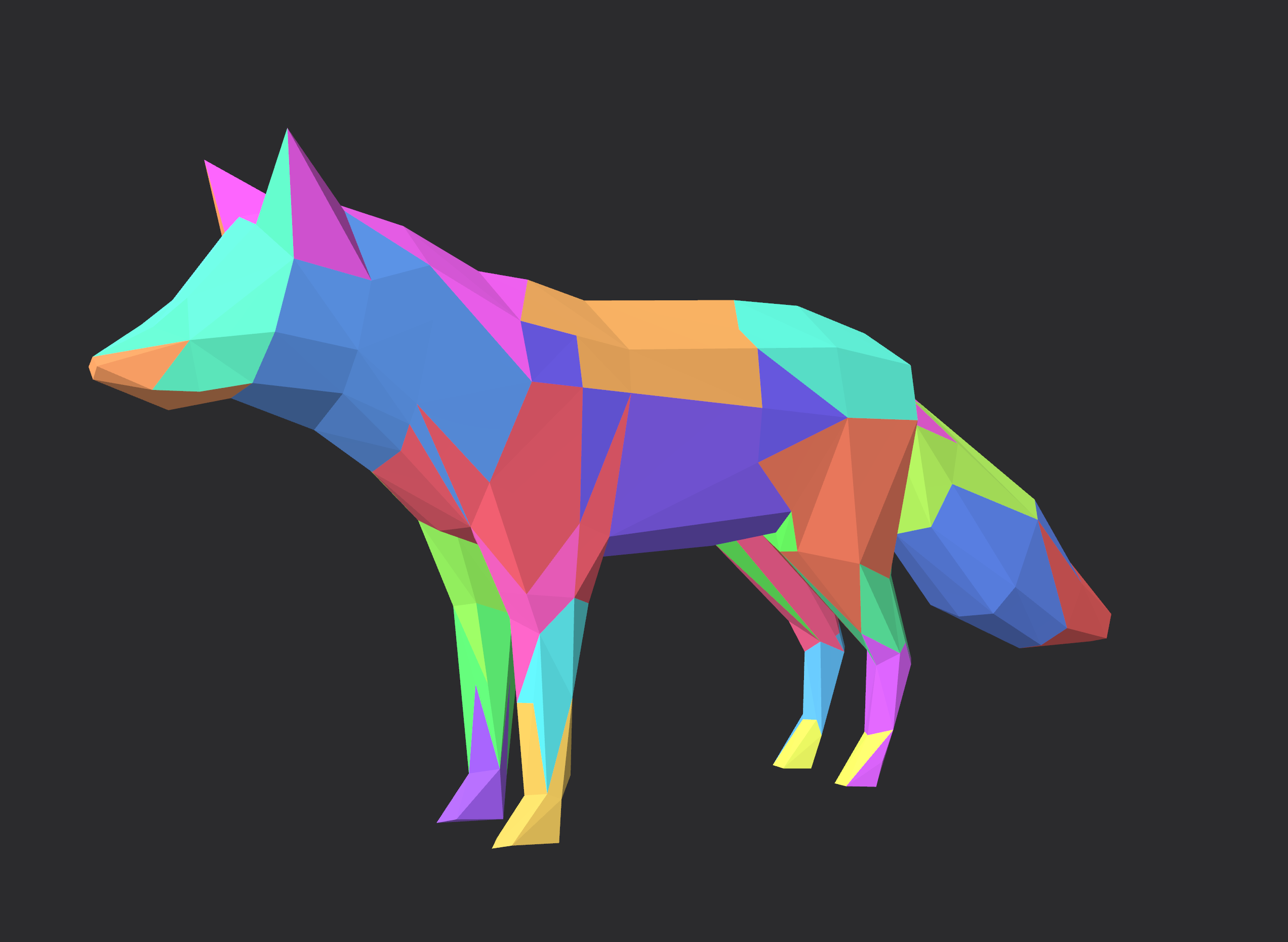
Why?
meshoptimizer does the heavy lifting in my asset pipeline: vertex cache optimization, meshlets and the LOD chain all come from it, and assetc now uses this crate for that. Existing Rust crates wrap the C++ library; I wanted one with no C dependencies at all, so the whole pipeline builds with cargo alone, cross-compiles cleanly and runs on WebAssembly.
Same rule as with ktx-rs: it only counts if the output matches the original bit for bit.
What’s included
- The library (
meshopt-pure, imported asmeshoptimizer): indexing, vertex cache / overdraw / vertex fetch optimization, simplification (including attribute-aware and sloppy), meshlets (clusterizer, meshlet utils and codec), partitioning, spatial ordering, stripification, tangent space, remeshing, opacity micromaps, vertex / index codecs and filters, quantization and analyzers. - SIMD decoders (feature
simd, default): SSE2 / SSSE3 / SSE4.1 on x86-64, NEON on AArch64 and simd128 on WebAssembly, detected at runtime. - gltfpack: library and CLI with byte-identical output to C++ gltfpack 1.3, including KTX2 / BasisU texture compression through ktx-rs. It lives in the repository but is not published.
- clusterlod: cluster LOD hierarchies, ported from
demo/clusterlod.h, also unpublished for now.
Versions follow upstream: 1.3.0 is meshoptimizer v1.3 (commit f0a684f).
How it’s verified
Every module was diff-tested bit for bit against the C++ reference - real meshes, generated grids, random triangle soups and fuzzed codec streams - with an out-of-repo harness, since C code is not allowed in the repository itself. On top of that:
- the upstream tests are ported 1:1, along with sanity tests and u16 vs u32 index equivalence tests,
- gltfpack and the demo programs are checked against golden C++ output,
- fuzz harnesses run on a pure Rust mutation driver, with coverage-guided libFuzzer targets in a separate dev-only crate,
- NEON is tested under qemu and simd128 / scalar under wasmtime.
Using it
Function names are the meshoptimizer ones in snake case with the same parameters (meshopt_optimizeVertexCache is optimize_vertex_cache). They are generic over u32 and u16 indices and return Result<T>:
[dependencies]
meshopt-pure = "1.3.0"
use meshoptimizer::{optimize_vertex_cache, simplify};

// indices: Vec<u32>, positions: Vec<f32> (x, y, z)
let source = indices.clone();
optimize_vertex_cache(&mut indices, &source, index_count, vertex_count)?;

// a LOD with half of the triangles
let mut lod = vec![0u32; index_count];
let mut error = 0.0;
let lod_count = simplify(&mut lod, &indices, index_count, &positions, vertex_count, 12, index_count / 2, 0.01, 0, Some(&mut error))?;
lod.truncate(lod_count);
The README has the full index -> optimize -> simplify example. gltfpack takes the same flags as the C++ one:
cargo install --path gltfpack
gltfpack -i scene.gltf -o scene.glb -cc -tc
Not ported
WebP texture output in gltfpack (-tw reports “built without WebP support”, like a C++ build without libwebp), the custom allocator API (use #[global_allocator]), the JS bindings and the internal tuning tools.
Design notes
- Pure Rust, no C dependencies.
unsafeis denied; the only exception is calling the SIMD decoders after runtime CPU feature detection.- The library never panics on bad input (
unwrap,expectandpanic!are denied). - MIT, like meshoptimizer. The sources are translations of meshoptimizer, cgltf, fast_obj, micro_ply and sdefl, all MIT licensed.
Source and per-module specs are on GitHub.